
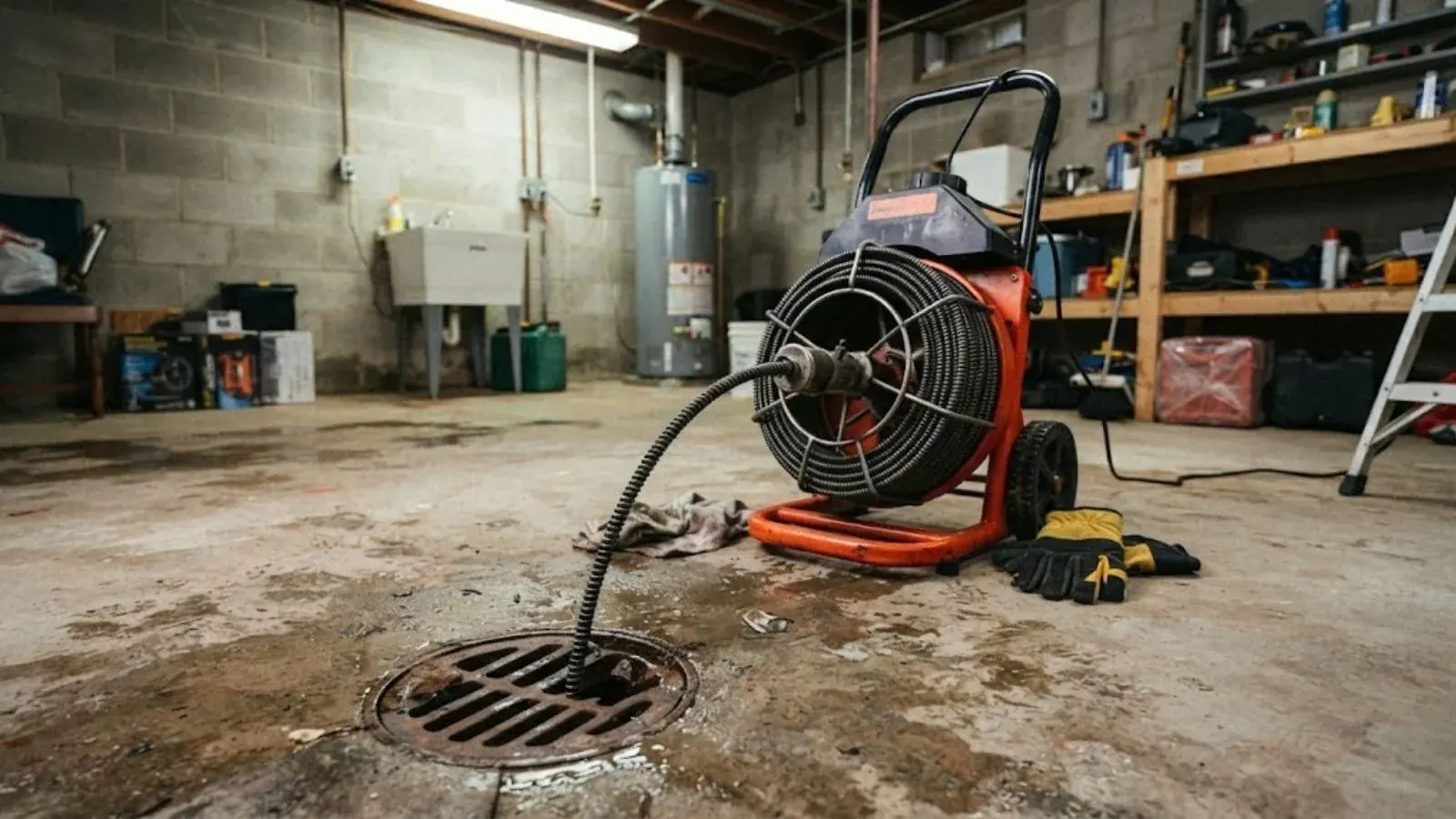
Basement waterproofing costs depend on what is wrong, and the first job is telling groundwater from plumbing. Groundwater seeping through a wall or floor is a drainage and sealing problem, handled by a waterproofing or drainage contractor. A leak from a pipe, a backed-up floor drain or a failed sump pump discharge is a plumbing problem. A quote that does not say which one it addresses is hard to compare.
Where the water comes from
| Source | Trade that usually handles it | First step |
|---|---|---|
| Seepage through wall or floor after rain | Drainage or waterproofing contractor | Check gutters, downspouts and grading |
| Water from a pipe or fixture | Plumber | Shut off the water, call, see leak detection |
| Floor drain overflowing with dirty water | Plumber | Stop using water, call, see sewer line cleaning |
| Sump pit overflowing | Plumber or drainage contractor | Check the pump, the discharge and the power |
| Water from a failed water heater | Plumber | Shut off supply, see replacement |
Look at the water. Clean water that appears after rain usually comes from the ground. Gray or dirty water, or water with an odor, usually comes from a drain. Water that appears when no one has used any fixtures may be a supply leak. The pattern is a clue, and the meter test in our leak detection page confirms a supply leak.
What drives the cost of waterproofing
- The cause of the water and the method needed to deal with it.
- Interior drain, exterior excavation or surface drainage changes.
- The length of wall or floor involved and how hard it is to reach.
- A sump pit, pump and discharge line, and a battery backup.
- Interior finishes that have to be removed and replaced.
- Permits where excavation or drainage work requires them.
We will not name dollar amounts, because the range is very wide and depends on the method. The right approach is two or three written quotes that say what problem each one addresses. Ask each contractor to explain why the method fits your wall, and ask for what is not included.
The plumbing parts of a basement
Items a plumber checks
- Floor drains and cleanouts, and whether they drain freely.
- The sump pump, its float switch and its discharge line, including whether the discharge is routed properly and not into the sanitary sewer unless allowed.
- A backwater valve or backflow protection, where the plumbing calls for one.
- Water heater and laundry connections for leaks and corrosion.
- The main shutoff valve and the pressure reducing valve.
A floor drain that backs up when it rains is not the same as water coming through a wall. It points to a sewer line problem, and our sewer line repair page explains the usual causes. A sump pump that runs constantly may be handling real groundwater, and a plumber or a drainage specialist can size and install it.
Questions to ask a waterproofing contractor
Ask what caused the water, what the method does about it and how the water will leave the house. Ask whether the system depends on a pump and what happens in a power outage. Ask whether any plumbing, such as a drain or a pump discharge, is included or left for you to arrange. Our 24/7 line is open if the plumbing side is causing the water right now.
Insurance
Many homeowner policies exclude groundwater seepage and flood. They may cover water from a burst pipe or a sudden failure, and some cover sewer backup only as an add-on. Read the policy and photograph the damage before cleanup. Insurers differ, and your agent can tell you what applies.
Compare quotes the useful way
What each written quote should state
- The cause of the water, as the contractor understands it.
- The method and where it applies, with a drawing or a clear description.
- Whether a pump is part of the system, and what powers it in an outage.
- What happens to the water, and where it is discharged.
- What is not included, such as drywall, flooring or permits.
- The warranty terms, and what voids them.
If the contractor will not say what caused the water, treat the quote with caution. A method that does not match the cause can be an expensive way to find out you needed something else. A plumber can rule plumbing in or out quickly with a meter test and a look at the drains, and that step often pays for itself.
Floor drains, sump discharge and backflow valves fall under the Uniform Plumbing Code (UPC) as adopted in Washington, so a plumber can tell you which parts of a waterproofing quote are plumbing work that needs a permit.
Kirkland note: who to call and what is listed
The City of Kirkland Public Works emergency line, 425-587-3900, is listed as open 24/7/365. The regional permit table lists backflow prevention devices as requiring a permit in Kirkland, so ask the City before adding backwater protection. The plumbing permit line is (425) 587-3600.
The City says the property owner maintains plumbing on private property, including sewer cleanouts, and the private side sewer. Soil and groundwater conditions vary from street to street, so a drainage contractor should look at your lot. If you live in Redmond, our Redmond page explains how we serve that area.
Basement water and plumbing questions
Partly. Drainage and sealing are usually a waterproofing contractor's work. Drains, sump discharge and supply leaks are plumbing.
Clean water after rain suggests groundwater. Water without rain may be a pipe. A meter test helps.
Often not. Policies vary, so check yours.
Ask the City of Kirkland. Requirements depend on the work and the discharge.
It may point to a sewer line problem. A camera helps.