
Installing a water heater is more than hooking up two pipes. The unit has to be placed where it can vent, drain and be reached, the gas or electrical supply has to be correct, and the installation has to meet code. A planned job lets you choose all of that deliberately. If the old heater has already failed, our emergency replacement page is the right place.
Planning the location
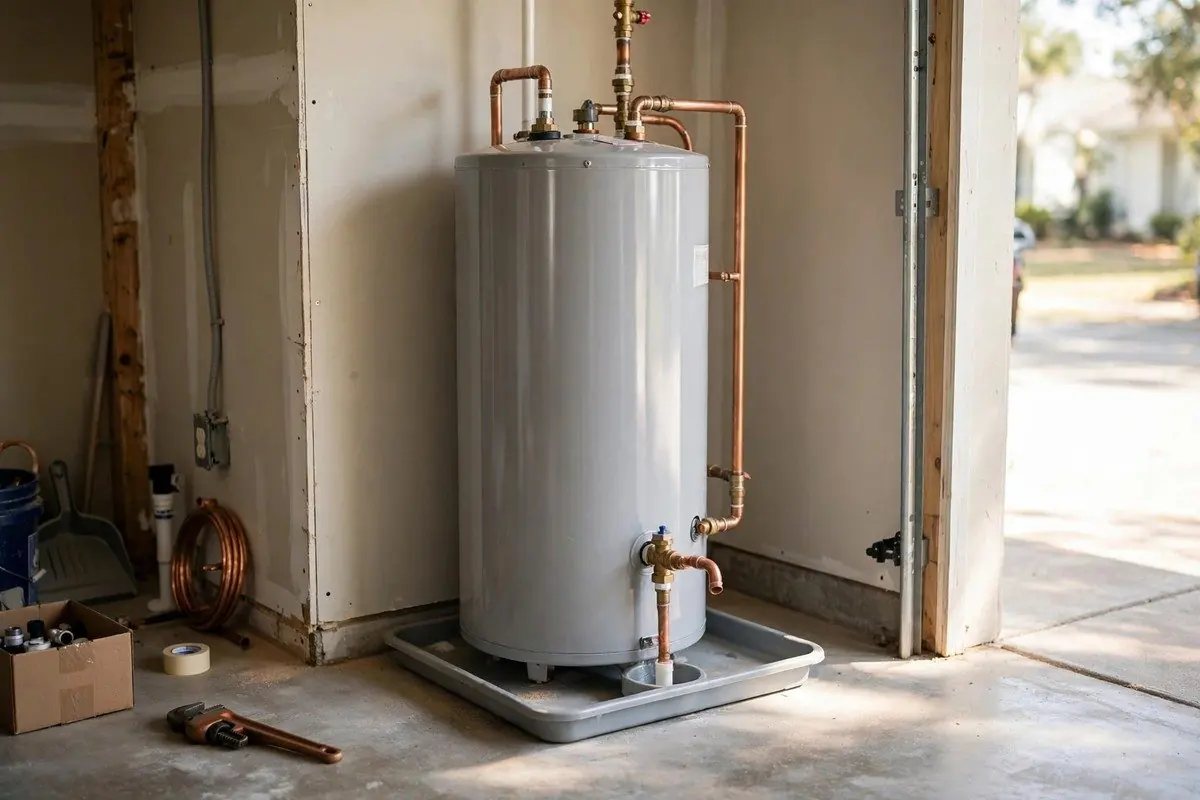
Many Kirkland homes have a water heater in a garage, closet, utility room or crawlspace. Garages need protection from vehicle impact and a raised base for gas units where required. Closets need combustion air for gas units and enough room for service. Upstairs or finished-space locations need a drain pan with a drain line. A plumber can walk the options and tell you what each location needs.
Fuel, size and type
| Type | Needs | Watch for |
|---|---|---|
| Gas tank | Gas line, vent, combustion air, relief valve | Venting and clearance rules |
| Electric tank | 240 volt circuit, relief valve | Electrical panel capacity |
| Hybrid heat pump | Space, airflow, condensate drain, electrical | Noise and cooler surroundings |
| Tankless | Larger gas line or high amperage, venting, condensate drain | Flow rate and inlet water temperature, see tankless water heaters |
Permits and code in Kirkland
Water heater replacement is on the permit-required list for Kirkland, according to the regional permit office table. A new installation or a move to another location is also plumbing and gas work that the building department reviews, so ask. The licensed plumber normally handles the permit and the inspection.
Washington's plumbing code, WAC 51-56, requires bracing against earthquake movement, so a tank must be strapped, and a relief valve with a proper discharge pipe is part of every install.
Gas piping also appears on the list of permit-required work for Kirkland. Gas work is not a place to experiment. If you smell gas at any point, leave and call Puget Sound Energy at 1-888-225-5773.
What a good installation includes
Items on the installer's checklist
- Seismic straps set to code and a level, stable base.
- A temperature and pressure relief valve with a discharge pipe routed to a safe location.
- An expansion tank where the plumbing requires one.
- A drain pan and drain line where a leak could damage finished space.
- Gas shutoff, venting and a leak test for gas units.
- Insulated hot and cold lines near the heater, and a shutoff valve on the cold supply.
Questions to ask any installer
Ask who pulls the permit, who schedules the inspection, whether the old tank is hauled away, and what warranty the manufacturer provides. You can verify any Washington plumber's license on the Department of Labor and Industries website at lni.wa.gov/verify. We recommend you do this for any contractor you hire.
Gas, venting and combustion air
Gas units need a vent that carries exhaust outside and enough air to burn cleanly. A water heater squeezed into a closet with no air supply can back-draft, which pulls exhaust into the house. This is why gas appliance placement is a code matter and not a style choice.
Newer power-vent and direct-vent units use a fan and sealed pipe to move air in and out, which opens up more locations in a house, at the cost of electrical power and a condensate or exhaust route.
Puget Sound Energy supplies natural gas in the area. If you smell gas, leave the house and call 1-888-225-5773 or 911 from outside. Gas appliance work belongs to a licensed professional.
Electric and hybrid units
An electric tank needs a dedicated 240 volt circuit sized to the heating elements. A hybrid heat pump unit adds a compressor and fan, and it draws heat from the air around it, so it works best in a space with room to breathe and a drain for condensate. Those details decide whether a given closet works. A plumber and an electrician may both be needed, and we will say so on the phone.
Seismic bracing and why it matters here
The Puget Sound region sits in earthquake country, and Washington's plumbing code addresses it by requiring that water heaters be braced. A strapped tank stays upright and keeps its gas and water lines intact in a shake. A loose tank can topple and break a gas connection, which is a risk worth designing out at installation.
Pricing factors
- Unit type, size and efficiency level.
- Changes to venting, gas, electrical or location.
- Permit and inspection fees.
- Old tank disposal.
- Whether the install is bundled with other plumbing work.
You get a clear price before work starts. A planned installation can often be scheduled to suit you. Call us to plan yours.
Water heater installation questions
Replacement usually means an urgent swap for a failed tank. Installation covers planned work such as a new location, an upgrade or a type change.
A straightforward installation takes a few hours. Moves, new venting and gas changes take longer.
Water heater replacement and gas piping appear on the permit-required list for Kirkland. We handle the permit.
Often yes, if there is access, clearance and venting. We will tell you what the location needs.
Use the L&I lookup at lni.wa.gov/verify. It shows license status for contractors and plumbers in Washington.
Yes. We remove and haul the old unit as part of the job.