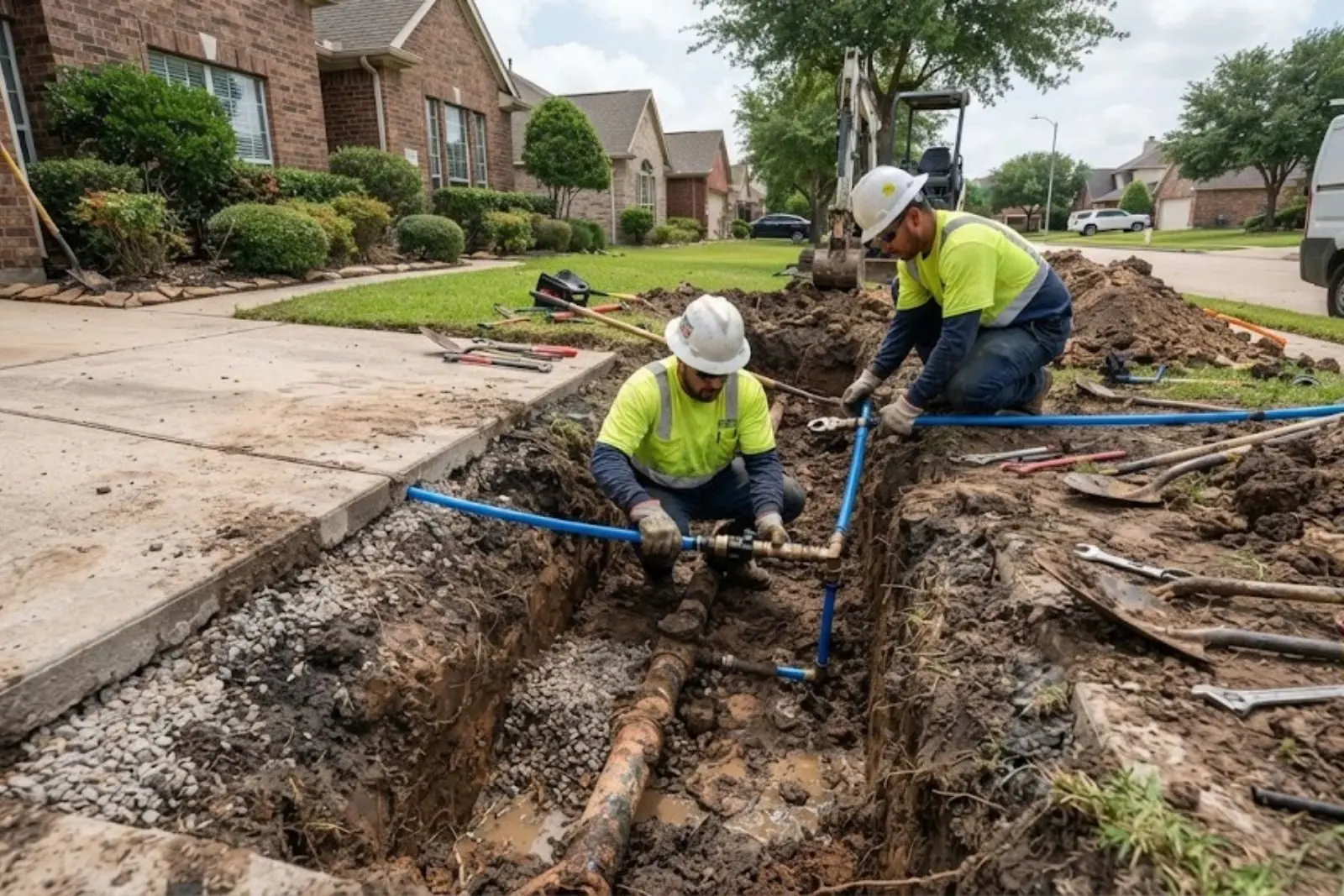
A water service line is the buried pipe between the City meter and your home. It sits underground, often under a driveway, lawn or landscaping, so a break usually shows itself through symptoms. Soft or soggy ground with no rain, a sudden drop in pressure, a meter that keeps turning with everything off, or a surprise jump in the water bill. If water is surfacing, call our 24/7 line.
Where the utility ends and your line begins
Kirkland buys water from Seattle Public Utilities through the Cascade Water Alliance and distributes it through the City system, with Northshore Utility District and Woodinville serving certain portions of north Kirkland. In general, the utility owns the main and the meter, and the pipe from the meter to the house belongs to the homeowner. The City's Water Division at (425) 587-3900 can confirm where your responsibility starts, and it handles questions about the meter itself.
That boundary matters when you are deciding who to call. A leak on the street side of the meter is a utility matter. A leak on the house side is yours, and a plumber can find and fix it.
Signs of a service line problem
Common symptoms
- The meter turns with every fixture closed and the irrigation off.
- A wet or sunken patch of ground along the path of the line.
- Water pressure that drops without a clear cause, especially at several fixtures.
- The sound of running water when everything is off.
- A water bill that rose without a change in use.
- Cloudy or discolored water after a repair or a line break.
If more than one of these shows up, a leak is likely. Our leak detection visit locates the break, and then we repair it.
Low pressure, not always a leak
Low pressure comes from several causes. A leak reduces flow to the house. A failing pressure reducing valve near the entry can choke pressure. Corroded galvanized pipe inside the house reduces it. A partly closed shutoff valve does the same. A plumber with a pressure gauge can tell which is at fault, and the answer decides if the fix is a line repair, a valve, or repiping.
Repair or replace the line
| Option | How it works | Best when |
|---|---|---|
| Spot repair | Dig down to the break and replace a short section | The line is otherwise sound and the break is localized |
| Full replacement by trench | Dig the full length and lay new pipe | The pipe is old, corroded or has multiple leaks |
| Trenchless replacement | Pull new pipe through the old path using small access pits | Landscape, a driveway or trees make a trench costly |
| Relocation | Run a new line in a better path | The old path is blocked or under a structure |
The right choice depends on what we find. A single pinhole in a modern pipe is a spot repair. A line with several leaks, or one that is galvanized steel from the mid-century, usually needs full replacement. We explain the trade-offs and the cost before any digging. Call 811 before anyone digs on your property, since it is the free service that marks buried utilities.
Pre-1985 plumbing and water quality
The City of Kirkland reports that no lead service lines were discovered within its water service area. It also notes that copper pipe installed before the 1985 King County lead solder ban is considered high risk for lead in homes. If your house predates that and you have a line or interior repair done, mention it to your plumber, and the City suggests flushing a tap for 30 seconds to 2 minutes before drinking when water has sat in pipes for hours.
Pricing factors
- Length, depth and pipe material of the line.
- Trench or trenchless method.
- What sits above the line: lawn, driveway, patio or trees.
- Permit and inspection needs for work in the right-of-way.
- Restoration after digging, which is often separate.
We give a clear price before work starts. Before you decide on a replacement method, call us and describe the path of the line.
Washington's plumbing code, WAC 51-56, adopts the Uniform Plumbing Code (UPC) with state amendments. A service line repair between the meter and the house sits on the owner's side, and the City or utility sets the rules at the meter. Ask the City water division before digging near it.
Water line questions from Kirkland homeowners
Yes. The line is open 24/7. If water is surfacing, close the main valve and call, and a plumber will be dispatched as soon as one is available.
In general the homeowner. The City of Kirkland Water Division at (425) 587-3900 can confirm where its responsibility ends.
Check the meter with everything off, and look for wet ground. If the meter turns, a leak exists. A plumber finds it.
No. It depends on soil, depth and the condition of the old line. We tell you what suits your property.
Causes include a leak, a failing pressure valve, corroded pipes or a partly closed valve. A gauge test tells us which.
Work in the right-of-way or on a service connection can require one. Ask the City of Kirkland, and we handle the application.