
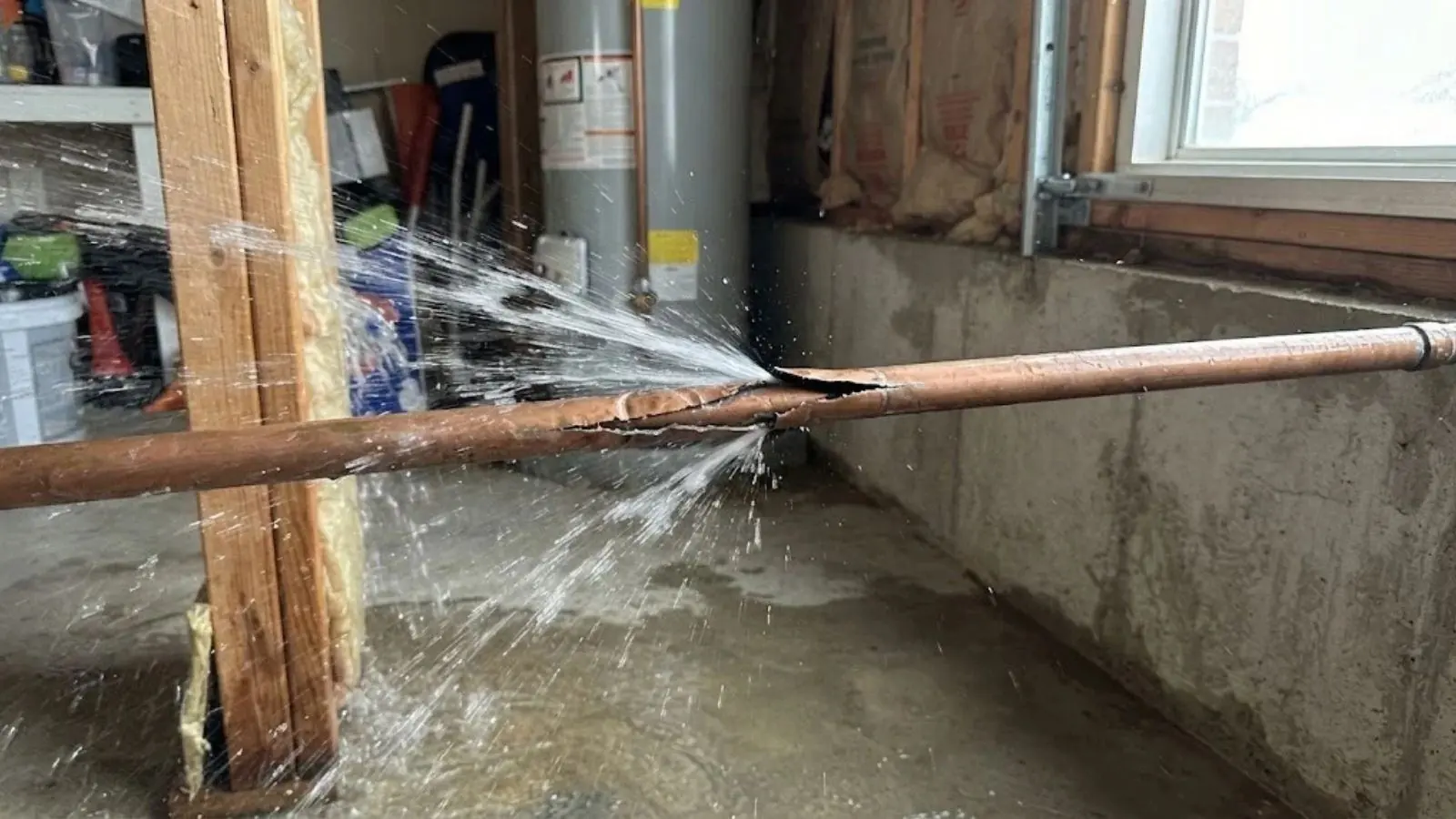
Kirkland winters are mild by national standards, so pipes freeze only on occasional cold nights. When they do, the damage is out of proportion to the cold, because homes here are not built for it. The pipes at risk are in unheated crawlspaces, garages and outside walls, and the hose bibs on the exterior. A frozen pipe is a warning. A burst pipe is an emergency.
Which pipes freeze first
At-risk spots in a typical home
- Supply lines in unheated crawlspaces and under floors over a garage.
- Pipes in exterior walls, especially at north-facing corners.
- Hose bibs and the short pipes that feed them.
- Irrigation backflow assemblies and exposed supply lines.
- Pipes in attics and garages, including a water heater in an unheated space.
Prevention before the cold arrives
- Disconnect hoses and shut off the indoor valve to outside spigots, then open the spigot to drain.
- Insulate exposed pipes in crawlspaces and garages with foam sleeves.
- Seal gaps where cold air enters near pipes, such as around dryer vents and cable lines.
- Open cabinet doors on exterior walls so room air can reach the pipes.
- Let a faucet drip on a very cold night, if a pipe is at risk.
- Know where your main shutoff is and test it.
Thawing a frozen pipe safely
Open the tap
Open the faucet the pipe feeds, so water can flow as it thaws.
Apply gentle heat
Use a hair dryer or warm towels on the pipe, starting near the faucet and working back.
Never use flame
Do not use a torch or open flame. It can start a fire and damage the pipe.
Watch for leaks
Once water flows, check along the pipe for cracks and drips.
If you cannot find the frozen section, or the pipe is behind a wall, call a plumber. A pipe can crack under the ice without showing, and when it thaws it leaks. Shut the main valve if water appears, and call our 24/7 line. Our burst pipe repair page explains what a repair involves.
If a pipe has already burst
| Step | Action |
|---|---|
| 1 | Shut off the main water valve |
| 2 | Switch off power in wet areas from a dry spot |
| 3 | Open taps to drain the system |
| 4 | Photograph the damage for insurance |
| 5 | Call a plumber for repair |
| 6 | Call a restoration company for drying if the structure is wet |
After a freeze, check the rest of the system
A freeze can crack a pipe that has not yet leaked, or stress a fitting that fails weeks later. After the weather warms, check the crawlspace and the garage for damp insulation, drips and stains. A hidden crack shows up as a water bill rise or a meter that moves. Our leak detection page explains how a plumber confirms it.
If you will be away during a cold snap
Empty houses freeze first, because nobody notices a drip and no one runs the water. Before you leave during a cold forecast, set the heat to a moderate temperature rather than off, open cabinet doors on exterior walls, and ask a neighbor to look in. If you want extra protection, you can shut off the main and drain the lines. A plumber can show you how to do that safely and how to restart.
Know what you will do on return. If a pipe froze while you were away, the first sign is often no water at the tap. Do not open every faucet and wait. Check for wet ceilings and floors first, shut the main if you see water, and call. Our 24/7 line is open for a burst pipe on any day.
Insulation, heat tape and what works
Foam sleeves are inexpensive and help in crawlspaces and garages. Heat tape made for pipes adds protection where cold air cannot be kept out, but only if you follow the manufacturer's instructions and use the right type for the pipe material. Never wrap it over itself, and replace it if it is damaged. A plumber can tell you which pipes in your house are the best candidates.
What a thaw costs versus what a burst costs
A frozen pipe that has not split costs nothing but time and a hair dryer. A split pipe costs a repair, drywall, insulation, flooring and possibly a claim, and the water often runs for hours before anyone sees it. That gap is why the cheap steps matter most: open the cabinet doors, let a faucet drip and keep the heat on.
If you rent, tell your landlord about any pipe that froze, even if it thawed without damage. A pipe that froze once is likely to freeze again in the same spot, and the fix may be insulation or a rerouted run that only the owner can approve.
Kirkland note: who to call and what is listed
The City of Kirkland Water Division lists (425) 587-3900 for water emergencies on its system, and the Public Works emergency line is open 24/7/365. If you cannot find or turn your own main shutoff, that line is the place to start.
Hose bibs appear on the permit-required list for Kirkland in the regional permit table, so ask the City before replacing one that has split. Treat any cold forecast as a reason to protect exposed pipes. In Redmond, call the City of Redmond for utility questions and see our Redmond page.
Frozen pipe questions
On occasional cold nights, yes, especially pipes in crawlspaces, garages and exterior walls.
Yes, with the faucet open and no standing water near the cord. Never use a torch.
Water on the floor, a drop in pressure or a meter that moves with everything off. Shut off the main and call.
On a very cold night, a slow drip at a vulnerable faucet can help.
Many policies cover sudden water damage from a burst pipe. Check your policy.