
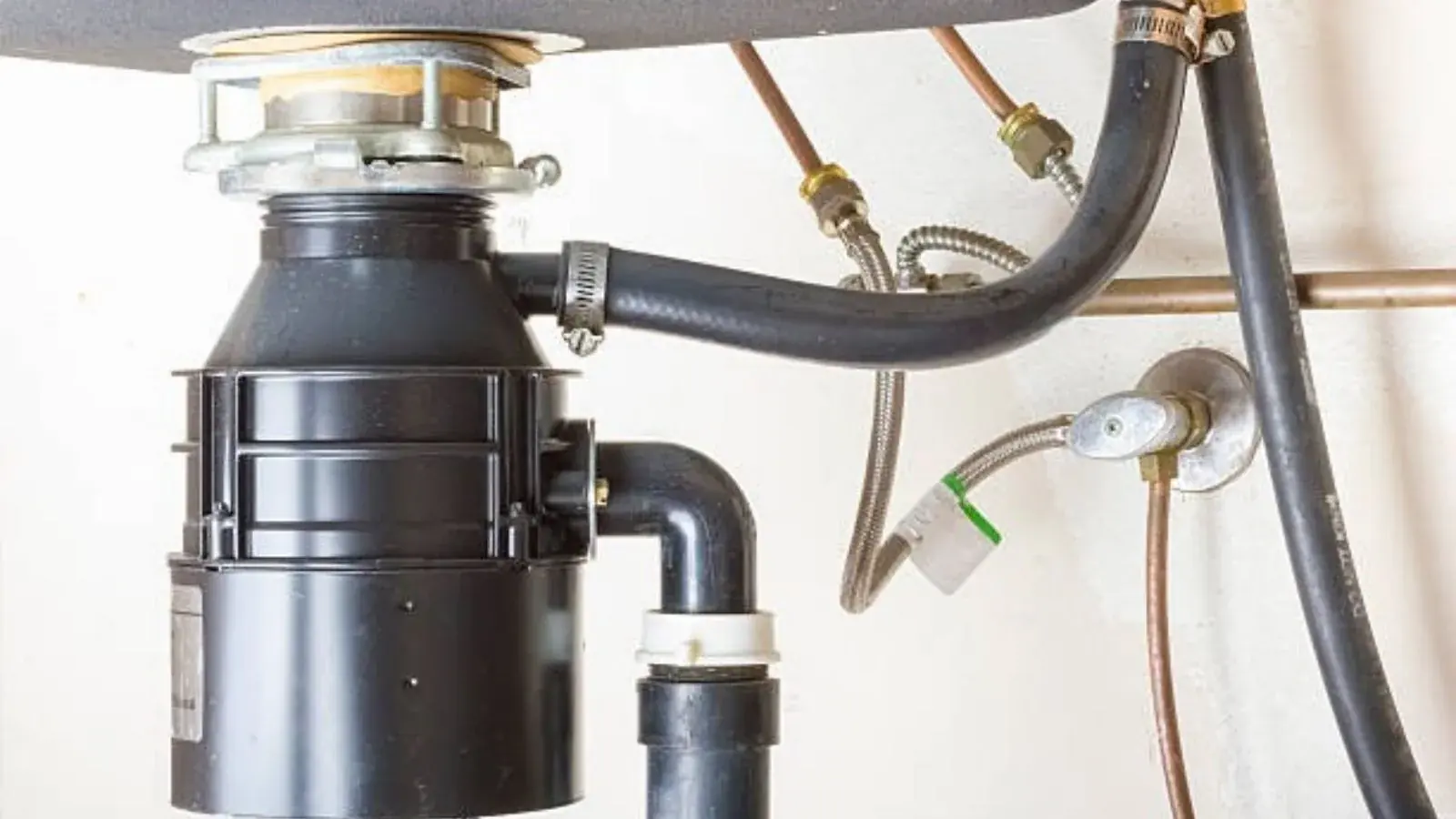
A double kitchen sink with a disposal drains through a single trap, and the layout decides whether it works. The disposal attaches to one bowl. A continuous waste pipe joins the second bowl to the disposal outlet or to the trap, and the dishwasher drain hose connects to the disposal. Get the slope and the connections right and the sink drains for years. Get them wrong and the second bowl gurgles and backs up.
The parts you need
- A disposal with a mounting assembly, rated for your electrical supply.
- A sink flange or drain basket for each bowl.
- A continuous waste tee, or a branch tailpiece, to join the two bowls.
- A trap with a trap arm that connects to the wall drain.
- A dishwasher drain hose connection or air gap, if applicable.
- Plumber's putty or silicone, and the correct gaskets and slip joints.
How the drain fits together
Mount the disposal
Fix the flange to the sink and attach the disposal to the mount, then rotate it to line up the discharge.
Join the second bowl
Connect the second bowl's tailpiece to the disposal outlet or to a waste tee below.
Connect the trap
Fit the trap and trap arm to the wall drain with a downward slope.
Connect the dishwasher
Attach the dishwasher drain hose, and knock out the plug inside the disposal inlet if the dishwasher drains through it.
Two details cause most callbacks. The first is the knockout plug in the disposal inlet. If the dishwasher hose connects but the plug is still in, the dishwasher will not drain and water backs up. The second is slope. A trap arm that slopes the wrong way holds water, and the sink drains slowly.
Venting and why it gurgles
A drain needs air. A sink trap connects to a vent, and without a working vent, water moving through the pipe pulls air through the trap and gurgles. Older kitchens, and those with long horizontal runs, sometimes lack a proper vent. An air admittance valve is a code-approved option in some places, and a plumber can tell you what your layout needs. If your new sink gurgles, the vent is the first suspect.
| Symptom | Likely cause | Fix |
|---|---|---|
| Second bowl will not drain | Wrong slope, blocked tailpiece, or wrong tee | Re-pitch the line |
| Dishwasher water in the sink | Knockout plug left in, or a clogged drain hose | Remove the plug, clear the hose |
| Gurgling | Venting problem | Check the vent or add an air admittance valve |
| Leak under the sink | Loose slip joint or damaged gasket | Re-seat and tighten |
| Disposal hums | Jam | See garbage disposal repair |
Electrical and safety
A disposal needs power. Some plug into an outlet under the sink, and some are hardwired to a switch. A GFCI-protected circuit near a wet area is standard practice. If you do not have a switch or an outlet, an electrician or a plumber with electrical experience should add them. Never put a hand in the disposal, and cut power at the breaker before any repair.
When to call a plumber
Call when the drain is old galvanized or cast iron, when the sink has no vent you can identify, when the cabinet is tight, or when the job includes moving the sink. The install is a good do-it-yourself project in the right conditions, and it can also create a leak that damages the cabinet. If the drain keeps clogging after you install, see drain cleaning for the cause. Our 24/7 line is open for leaks.
Water, noise and what to buy
A larger motor grinds more and runs quieter, and a continuous-feed model is the usual choice for a household kitchen. Sound insulation, a stainless grinding chamber and a long warranty are things to compare. None of them changes how the sink drains, so the installation quality matters more than the model on the box. If you cannot find an outlet or a switch, ask an electrician about adding them before the disposal arrives.
After installation, run cold water, switch the disposal on and watch the cabinet floor with a flashlight. Look for drips at every slip joint and at the flange. Run the dishwasher through a short cycle with the disposal connection in place. A small leak is far easier to fix on the day of the install than after the cabinet floor has soaked.
Kirkland note: grease, wipes and the kitchen line
The City of Kirkland tells residents that fats, oils and grease down the drain are an expensive problem, an environmental hazard and a public health issue. The City also runs a used-cooking-oil collection tank at the North Kirkland Community Center. A disposal does not break grease down, so keeping it out of the sink is the best way to keep a new double sink draining.
Fixture work that does not change plumbing lines is listed as not requiring a permit in the regional guide, but moving a sink or altering drain and vent lines is different, so ask the City of Kirkland. If you live in Redmond, see our Redmond page for how we serve that area.
Double sink and disposal questions
Most can, but the disposal attaches to one bowl and the drain needs a proper waste tee and slope.
The knockout plug in the disposal inlet may still be in place. Remove it with a screwdriver and a hammer, and remove the plug piece from the disposal.
Requirements vary by jurisdiction and installation. A plumber can tell you what applies.
Fixture work without plumbing line changes is generally listed as not requiring one. Ask the City if you move or change the drain.
Leaving the dishwasher knockout plug in place, and a trap arm that slopes the wrong way.