Glacier Bay is a toilet line that many homeowners have in their houses. Whatever the brand, a toilet is a simple machine, and most failures come from a handful of parts. A flapper that does not seal makes the toilet run.
A worn fill valve causes slow filling or noise. A cracked or loose bolt leaks at the tank. Matching the symptom to the part tells you whether the fix is a few minutes or a call.
Find the model first
Look inside the tank for a stamped model or date code, and note the brand on the lid and bowl. Take a photo of the fill valve and flapper before you buy parts. Many Glacier Bay toilets use standard-size flappers and fill valves, but flush valve sizes vary, and a mismatch is the most common mistake. Bring the old part to the store, or photograph it with a ruler beside it.
| Symptom | Part to check | Homeowner difficulty |
|---|---|---|
| Runs on and off | Flapper or chain length | Easy |
| Constantly running | Flapper, fill valve or overflow tube | Easy to moderate |
| Slow tank fill | Fill valve or supply valve | Moderate |
| Weak flush | Water level too low, clogged jets or a partial clog | Easy to moderate |
| Leak at tank bolts | Rubber washers or bolts | Moderate |
| Leak at the base | Wax ring or flange | Plumber recommended |
| Wobbles | Loose bolts or flange problem | Moderate |
Fixing a running toilet
Shut off the water
Turn the angle stop behind the toilet clockwise and flush to empty the tank.
Check the flapper
Look for a warped, sticky or worn flapper, and a chain with too much slack.
Replace the part
Fit a matching flapper, adjust the chain so it has a little slack, and open the supply.
Test
Add food coloring to the tank and wait twenty minutes to see if color reaches the bowl.
If the flapper is fine, the fill valve may be failing to shut off, or the water level may be above the overflow tube. Adjust the float, and replace the fill valve if it still runs. A new fill valve is an inexpensive part and a small job for a patient homeowner.
Weak flush and partial clogs
A toilet that flushes weakly can have clogged rim jets, a low water level or a partial blockage in the trap. Mineral deposits and sediment clog the small holes under the rim, and a thin wire or a vinegar soak clears them. If the toilet also gurgles or other drains are slow, the blockage may be deeper, and our drain cleaning page explains what to expect.
When to stop and call
Reasons to call a plumber
- Water on the floor around the base, which means a failed seal.
- A cracked tank or bowl.
- A toilet that rocks, which can mean a damaged flange.
- A supply valve that will not turn or leaks when you turn it.
- More than one drain in the house misbehaving at once.
- Water that is not clean, which is a drain issue and not a fill issue.
A leak at the base is the one that deserves a plumber. The seal is hidden, the floor may already be damaged, and a poor reset leaks again. Our toilet repair page covers what a visit involves, and if there is water on the floor now, our 24/7 line is open.
Repair or replace
If the toilet is sound and parts are available, repair is usually the cheaper option. If the porcelain is cracked, the finish is crazed, or the toilet is an old high-flow model, replacement can save water and money. A plumber can tell you honestly whether your toilet is worth another repair.
Parts and tools to have on hand
Before you open the tank
- Shut the supply valve at the wall and flush to empty the tank.
- Take a photo of the tank interior so you can reassemble it in order.
- Check the model number inside the tank or on the bowl, since parts differ by year.
- Buy a flapper, fill valve or seal kit that matches that model.
- Keep a sponge and a towel for the last bit of water.
- Stop and call if the bowl rocks, the floor feels soft or water shows around the base.
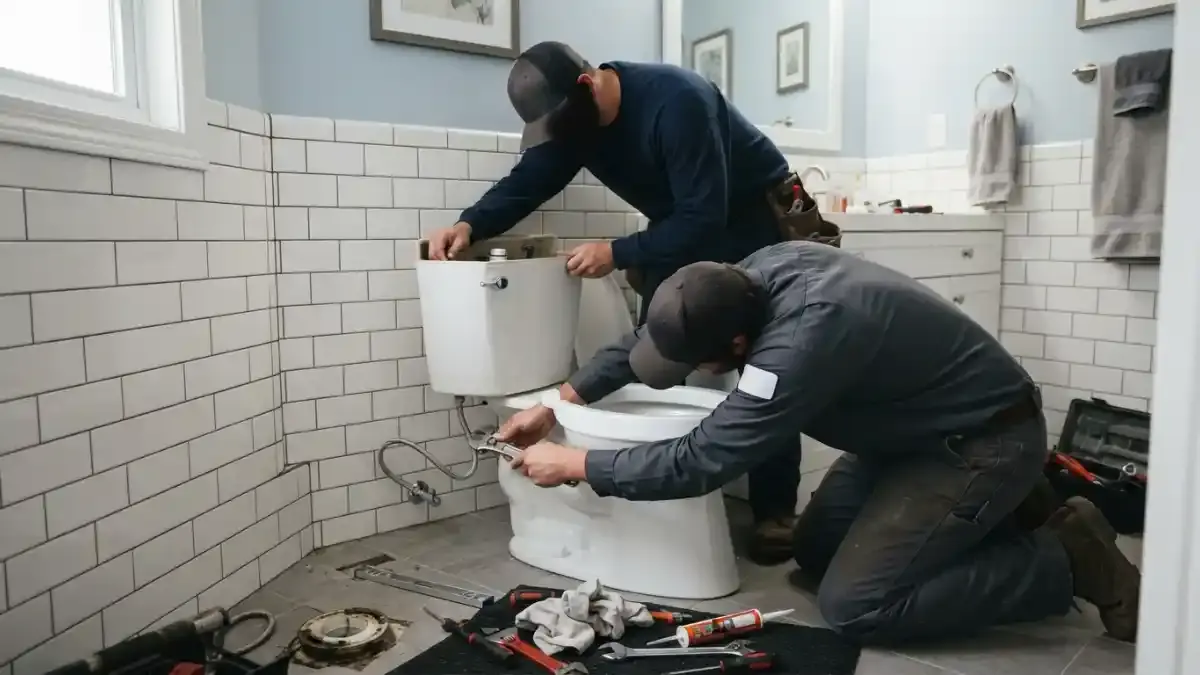
A rocking bowl or a wet floor around the base points to the wax seal or the flange, and that repair needs the toilet lifted. It is a job worth leaving to a plumber, because a poor reseat leaks into the subfloor where you cannot see it. Our toilet repair page explains what that visit involves.
Kirkland note: permits and older toilets
The regional permit table lists simple fixture replacements, such as sinks and toilets without plumbing line changes, as not requiring a permit. It is a general list and not a ruling on your project, so check with the City of Kirkland building department if you are changing the drain or the supply. The plumbing permit line is (425) 587-3600.
In older Kirkland homes, including mid-century houses in Juanita and Finn Hill, the supply valve behind the toilet may be decades old and may leak when turned. Replacing it at the same time as a flapper or fill valve is worth the small extra cost. If you live in Redmond, see our Redmond page.
Glacier Bay toilet questions
Often inside the tank or under the lid, and sometimes on the back of the bowl. Photograph it before you buy parts.
A leaky flapper is the most common cause. Replace it and test with food coloring.
Many flappers and fill valves are universal, but flush valve size varies. Match the size.
Regional guidance lists simple fixture work as not requiring one. Ask the City for anything involving lines.
New flappers and fill valves often last for years, though it varies with water quality and use.