A toilet clog that survives a plunger and a toilet auger is probably not in the toilet. It sits farther down the pipe, in the branch line or the main sewer line. The signs are in the other fixtures. If the tub gurgles when you flush, or the lowest drain in the house bubbles, the toilet is only where the problem shows up. Stop using water and call a plumber who can reach the line.
Toilet clog or deep clog?
| What you see | What it means | Next step |
|---|---|---|
| Only the toilet is slow, and a plunger works | Clog in the trap | Plunge, then use an auger |
| Toilet clogs again right after plunging | Partial blockage past the trap | Camera or larger cable |
| Tub or sink gurgles when you flush | Shared drain line clogged | Stop water, call a plumber |
| The lowest floor drain backs up | Main line clog | Stop water, call a plumber |
| Several toilets are slow at once | Main line problem | Stop water, call a plumber |
What to try first
Safe tries for a toilet clog
- Use a flange plunger, with enough water in the bowl to cover the cup.
- Push gently at first, then pull firmly and repeat.
- Use a closet auger, which is made for toilets and will not scratch the porcelain.
- Pour a bucket of warm water slowly into the bowl, to help the water move.
- Avoid chemical drain openers, which can splash and damage pipes.
If the water level in the bowl falls after plunging, you are making progress. If it does not, or the water rises when you stop, the blockage is deeper. Do not keep flushing. Each flush adds water to a line that cannot take it, and the overflow is not clean.
What blocks a line past the toilet
Common culprits are flushed wipes, paper towels, feminine products, excess paper, grease from the kitchen that has hardened in the main line, and tree roots in a joint. A toy or a bar of soap sometimes appears. A camera shows what is there and tells the plumber whether to cable, jet or repair. Our sewer line cleaning page explains the tools, and hydro jetting explains the deeper clean.
What a plumber does
Find access
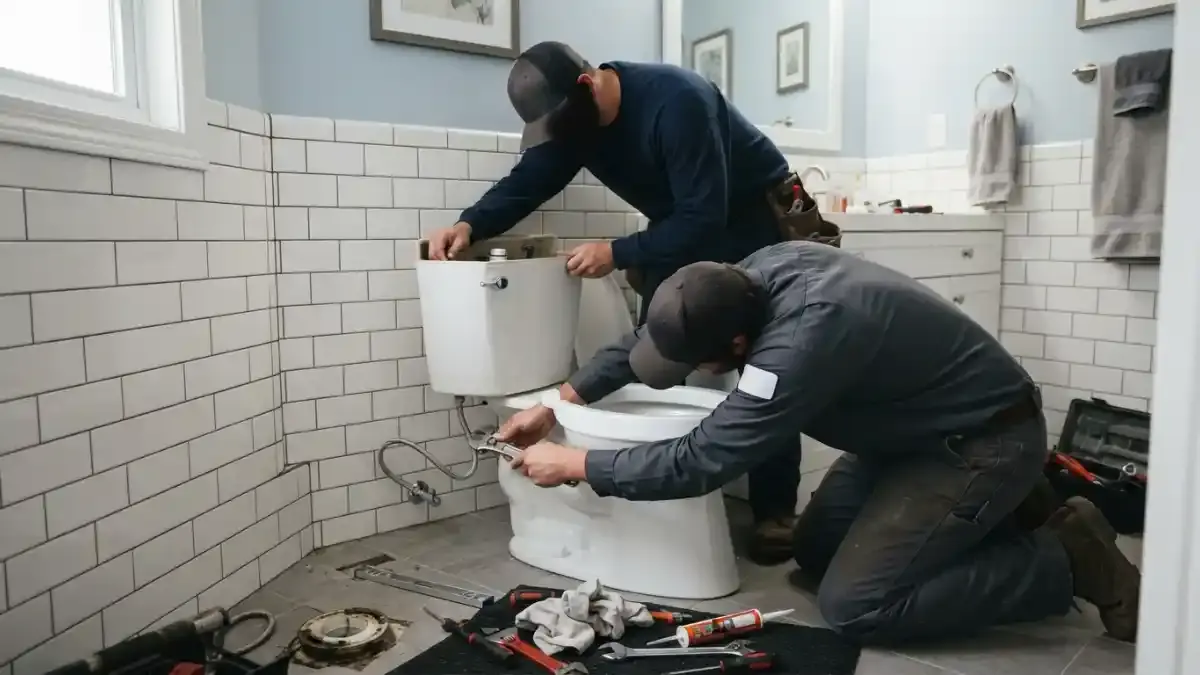
The plumber locates a cleanout or pulls the toilet to reach the line.
Clear the blockage
A cable machine breaks up and pulls out the plug.
Camera the line
A camera shows the cause and any damage.
Explain
You get a plain explanation and a price before any repair.
If the blockage is sewage overflowing now, call our 24/7 line. Keep children and pets away, and keep the water off.
Stopping it from coming back
Flush only toilet paper and human waste. Wipes sold as flushable do not break down in the pipe, and they are a leading cause of sewer backups. Keep grease out of the kitchen drain. If a camera shows roots or a sag, the repair is the lasting answer, covered on our sewer line repair page.
Why kids and rentals see this more
Households with young children and rental homes see deep clogs more often, because toys, wipes and extra paper find their way into the toilet. A rental with several tenants over the years may also have wipes and grease residue in the line that no one tenant caused. If you manage a property, a camera look after the second clog in a year is cheaper than the third visit.
Low-flow toilets are not the villain, but they depend on a clean, properly sloped line. When the line carries a partial blockage, the weaker flush cannot push the solids through, and the toilet clogs again. Clearing the line restores the flush, and that is why a plumber often looks at the line when a toilet clogs repeatedly.
Questions to ask the plumber
- Where was the blockage, in the toilet trap, a branch or the main line?
- Did the camera show roots, a sag or a crack, and can I see the footage?
- Is a repair needed, or will cleaning hold?
- How soon should I expect it to return if I do nothing?
- Who is responsible for the line where the problem sits?
Branch drains and main lines are sized and sloped under the Uniform Plumbing Code (UPC) as adopted in Washington. A line that has lost its slope or has roots in it is a repair, and repair work must meet the same code.
Kirkland note: the line past your toilet
The City of Kirkland states that the property owner owns and maintains the private side sewer, which begins at the public sewer main, and that plumbing on private property, including sewer cleanouts, is the owner's responsibility. The City operates the public sewer mains in the southern part of Kirkland, and Northshore Utility District serves the northern, more recently annexed part. The Public Works emergency line is 425-587-3900 and Northshore's number is 425-398-4400.
The City also warns that unflushables, such as wipes and paper towels, can create a sewer backup in your home. If you live in Redmond, our Redmond page explains how we serve that area.
Deep toilet clog questions
If other drains gurgle or back up when you flush, or the lowest drain bubbles, the main line is likely involved.
A few attempts are fine. If the water does not drop, stop. Repeated flushing can overflow the bowl.
Not reliably, and it can damage pipes and harm the next person who opens the line. We recommend mechanical clearing.
The utility handles the public main. The owner maintains the private side sewer. A camera shows which side the clog is on.
Often a short visit once the plumber can reach the line. A camera and repair, if needed, take longer.